The restaurants winning right now are not necessarily the ones spending the most on technology. They are the ones who figured out which technology solves a real problem, and implemented it without breaking what already works.
There is a version of the restaurant technology conversation that sounds like a sales pitch, AI this, automation that, the future is here. That version is not particularly useful to the owner who has 28 covers tonight, two servers short, and a kitchen that communicates via Post-it notes.
This article is for that owner. It is a grounded, honest look at the restaurant technology that is genuinely changing operational outcomes in 2026, what each tool does, why it matters, and how to think about introducing it without creating more problems than it solves.
Why Restaurant Technology Has Become Non-Negotiable
For most of the last decade, technology adoption in hospitality was optional. The industry ran on relationships, intuition, and the willingness of staff to absorb the gaps that systems left behind. That model has broken down.
Labour costs have risen faster than revenues. Guest expectations, shaped by digital experiences in every other part of their lives, have outpaced what traditional hospitality workflows can deliver. And margins, which were never generous, have been squeezed by energy costs, supply chain volatility, and post-pandemic rent pressures.
In that environment, restaurant technology is no longer a competitive advantage. It is the infrastructure that allows a restaurant to operate at a standard guests now consider normal. The restaurants that are not investing in operational technology are not standing still. They are falling behind restaurants that are serving faster, wasting less, and managing with fewer people doing more, because their systems are doing work that used to require additional headcount.
The Technology Categories That Are Delivering Results
Not all restaurant technology delivers equal value. Some of it is genuinely transformative. Some of it is expensive and underused. The clearest way to evaluate any tool is to ask one question: Does this remove a friction that currently costs us money, time, or guest satisfaction?
The following categories consistently pass that test.
1. QR-Based Ordering and Service Systems
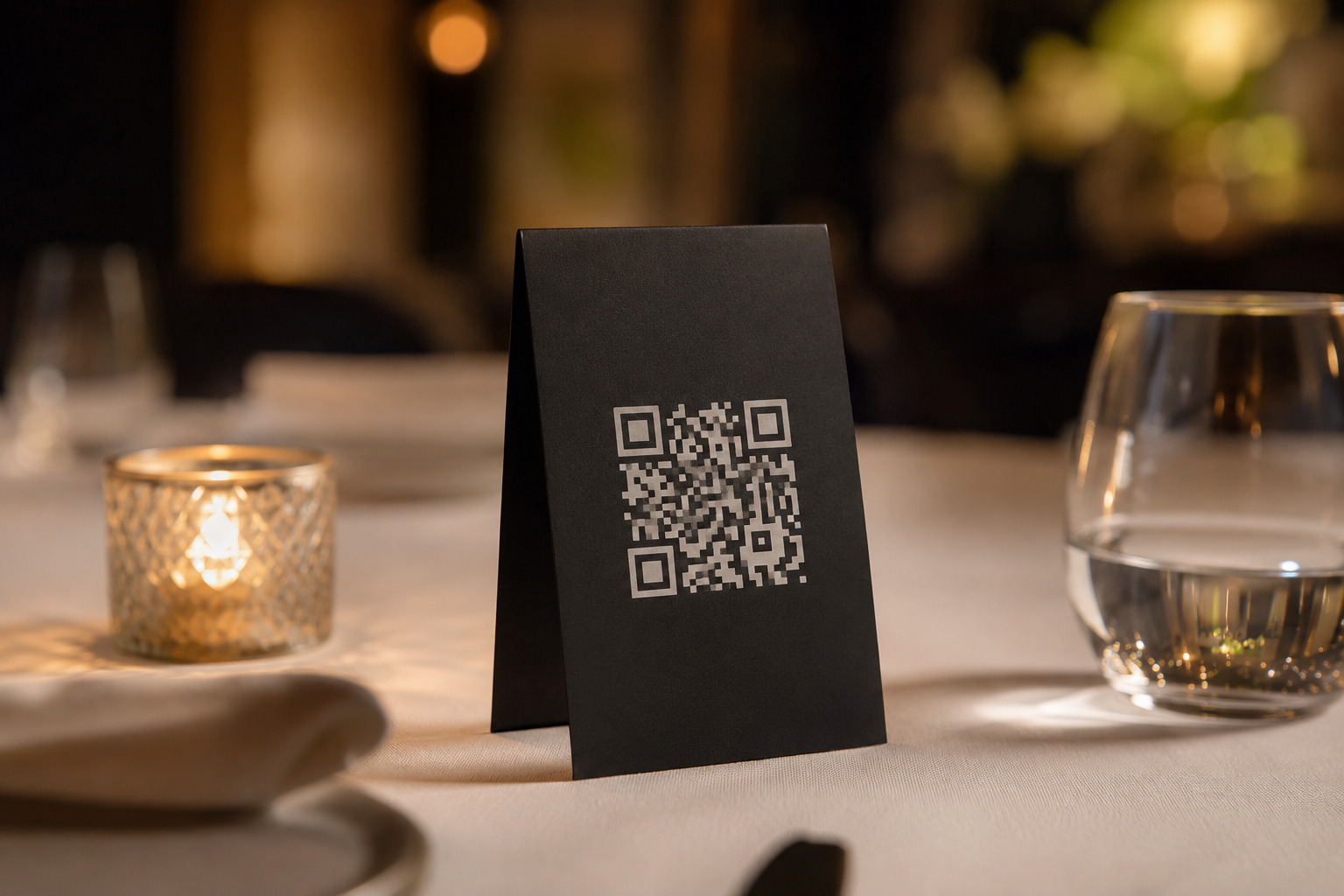
QR codes went from pandemic necessity to permanent fixture, and for good reason. A well-implemented QR ordering system does several things at once: it gives guests immediate access to a menu without waiting for a server, it allows instant updates to items and pricing without reprinting costs, and it creates a direct communication channel between the table and the kitchen or floor staff.
The most effective QR systems go beyond the menu. They allow guests to call a waiter, request the bill, leave feedback, and view the menu in their own language, all from their phone, without downloading an app. For restaurants serving international guests or running with lean staffing, this single tool replaces several manual workflows simultaneously.
2. Restaurant Management Technology for the Floor
Table management used to mean a clipboard and a seating chart. Modern restaurant management technology gives operators live visibility of their entire floor, which tables are occupied, which need service, which are ready to turn over, from a single dashboard.
Combined with area-based staff routing, where servers receive notifications only from their assigned zones, this eliminates one of the most persistent sources of service failure: multiple staff converging on one table while another sits unattended. The result is calmer service, fewer errors, and a measurably shorter gap between guest need and staff response.
3. Kitchen Display Systems and Back-of-House Integration
Paper tickets at the pass are a communication bottleneck that compounds under pressure. Kitchen display systems replace them with real-time digital order queues that update automatically when an order is placed, modified, or cancelled.
The impact shows up in ticket times, industry data puts the improvement at 15 to 25 percent in the first month, and in the reduction of miscommunication errors that lead to remakes, delays, and unhappy guests. In a kitchen running at capacity, those gains are not marginal. They are the difference between a shift that holds together and one that does not.
4. Digital Menus and Menu Management Tools
The printed menu is one of the most expensive single-use items in a restaurant’s operating budget. Every price change, seasonal update, or sold-out item requires either a reprint or an awkward verbal correction from staff. A digital menu eliminates that cost and adds capabilities that print never had.
Dynamic pricing, allergen visibility, AI-generated food photography, multilingual display, and instant promotional banners are all available through modern digital menu platforms. The guest experience improves because the information is clearer and more current. The operational experience improves because the restaurant is no longer hostage to its last print run.
5. Restaurant Operations Software and Analytics
The shift from gut feeling to data-driven decision-making is one of the most significant changes technology has brought to restaurant operations. Restaurant operations software that tracks service performance, peak hours, staff response times, and table activity gives managers a factual basis for decisions that previously relied entirely on experience and instinct.
This matters most at the edges, the slow shifts that are quietly expensive, the staff schedules that are chronically misaligned with actual demand, the table layouts that create bottlenecks no one has ever named. Data makes these visible. Visibility makes them fixable.
“The gap between what a restaurant thinks is happening on its floor and what is actually happening is almost always larger than anyone wants to admit. Technology closes that gap.” |
6. Restaurant Automation in the Back Office
Inventory management, payroll processing, supplier ordering, and compliance tracking are all areas where restaurant automation has made significant inroads. Automated inventory systems that track usage in real time and trigger purchase orders when stock falls below threshold levels have reduced over-ordering by up to 31 percent in documented cases.
The practical benefit is not just cost reduction, it is the return of management attention. Every hour a restaurant owner spends manually counting stock or reconciling supplier invoices is an hour not spent on the parts of the operation that actually require their judgment. Automating the administrative layer gives that time back.
7. Hospitality Technology for Guest Communication
The best restaurant guest experiences in 2026 share a common quality: guests feel attended to without feeling managed. The technology behind that experience is largely invisible, digital service request systems that route the right person to the right table, automated feedback prompts that appear at the right moment in the meal, and multilingual interfaces that ensure international guests never feel like an afterthought.
Hospitality technology that focuses on guest communication does not replace warmth. It removes the structural failures that prevent warmth from being expressed consistently, the missed signal, the ignored table, the frustrated guest who has been trying to pay for twelve minutes.
How to Adopt Restaurant Technology Without Overcomplicating It
The most common failure in restaurant technology adoption is not choosing the wrong tool. It is choosing too many tools at once, implementing them poorly, and ending up with a system that creates more friction than it removes.
The practical approach is sequential. Identify the single operational failure that costs the most, whether that is slow table turnaround, missed service calls, stock waste, or miscommunication errors, and find the technology that addresses it specifically. Implement it fully. Measure the impact. Then identify the next problem.
This approach keeps the team from being overwhelmed, ensures each tool gets a genuine trial, and builds internal confidence with technology gradually rather than demanding a complete operational transformation overnight.
How Call The Service Fits Into the New Restaurant Technology Landscape
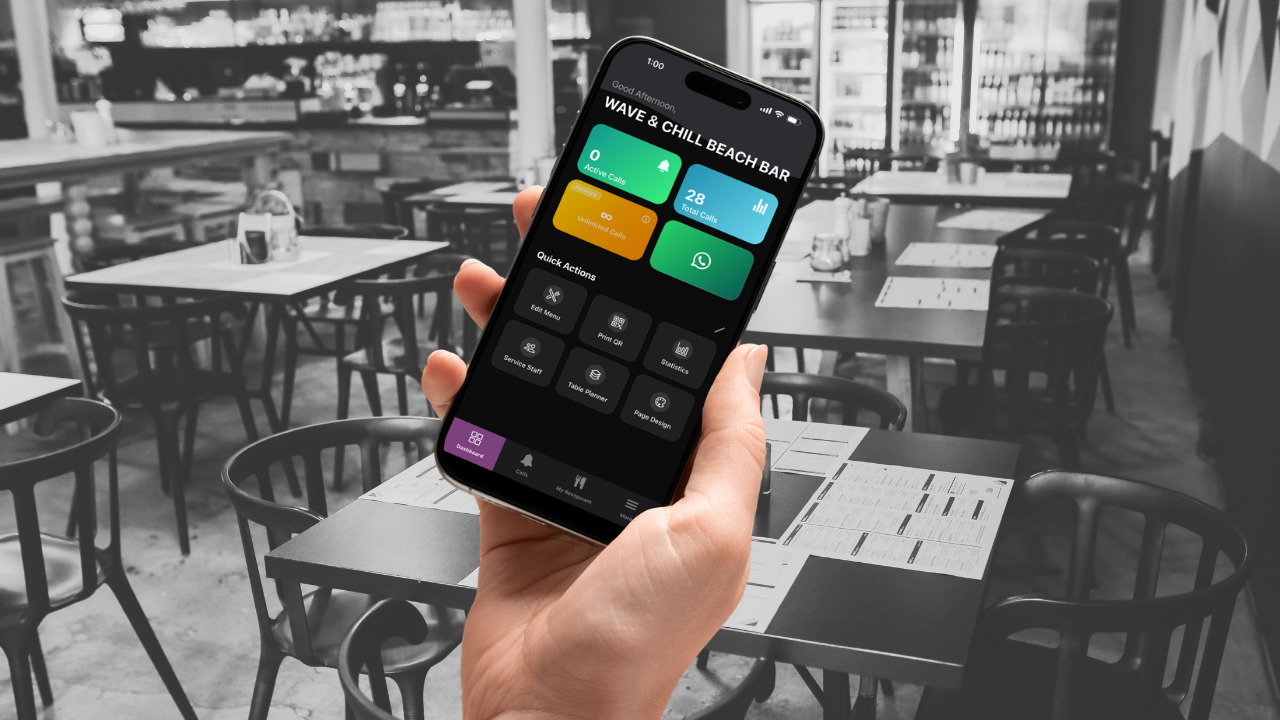
Call The Service is a QR-based platform built for the specific operational challenges that restaurant technology should solve, not the aspirational ones, but the real ones that play out every shift.
Guests scan a QR code at their table and immediately access a clean digital interface, no app download, no friction, no waiting for a server to bring a menu. From there, they can call a waiter, request a specific item, view the menu in their own language, or ask for the bill. The whole interaction takes under ten seconds.
On the management side, Call The Service provides live table status across the entire floor, area-based staff routing so each server only receives calls from their assigned zone, a multilingual digital menu with translation across more than 100 languages, guest ratings after every service call, and a statistics dashboard tracking response times, call volume, and peak hours.
What makes it relevant to the broader restaurant technology conversation is the pricing model. At €99 per year, with a free plan available, it is designed to be accessible to independent operators who cannot absorb the cost of enterprise-grade systems. The mission is straightforward: give the floor the same kind of visibility and control that smart kitchen technology gives the back of house, at a price that makes operational sense.
For restaurants at the beginning of their technology adoption, Call The Service is a practical first layer, something that solves a real problem from day one without requiring a systems overhaul. For restaurants already using digital kitchen tools, it closes the loop between back-of-house efficiency and front-of-house service quality.
The Bottom Line
Restaurant technology in 2026 is not a single product or platform. It is a set of decisions about which parts of your operation are currently losing you money, guests, or staff, and which tools most efficiently address those specific losses.
The restaurants making the best use of technology right now are not the ones with the most sophisticated systems. They are the ones who started with a clear problem, found a tool that solved it, and built from there. Each layer of technology they added made the next layer easier to justify and easier to implement.
The industry has spent years treating technology adoption as a capital investment question. The tools available today have changed that framing entirely. The question is no longer whether you can afford to implement restaurant technology. For most operators, the more accurate question is whether you can afford not to.