
A guest asks whether a meal contains an ingredient they are allergic to. The server checks with the kitchen, but the chef needs to confirm the sauce recipe. Meanwhile, another employee begins plating the order. 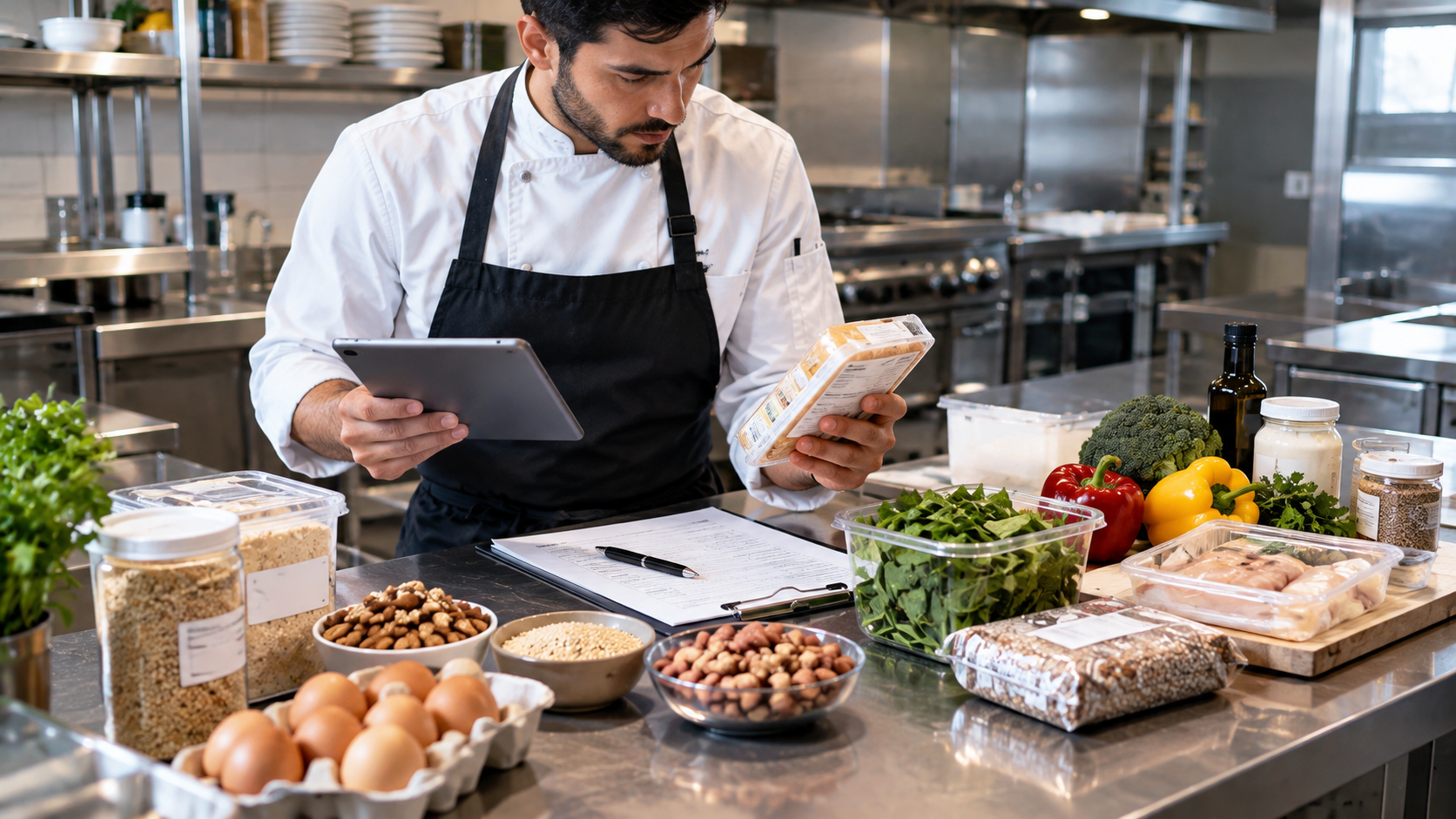
This everyday scenario exposes an important question: who decides when an allergy order is ready to proceed? A useful food allergen process gives employees clear responsibilities at each stage of service. It connects the information used to recommend a dish with the ingredients and equipment used to prepare it. Here is how to turn that idea into a workable restaurant routine.
Test your records with a complete order
Imagine a guest with a sesame allergy ordering a roasted vegetable bowl. Your review should follow the actual order: vegetables, grain base, dressing, seasoning, garnish, and any requested addition.
For an internal worksheet, use fields such as these:
| Field | What to record |
|---|---|
| Menu item | Exact name used on the ordering system |
| Recipe version | Date or version identifier |
| Purchased components | Product names linked to current ingredient information |
| Optional additions | Each topping, dressing, and substitution |
| Preparation review | Equipment and handling steps requiring attention |
| Reviewer | Person who checked the entry and review date |
Treat this as an organizational aid, not a safety certification. Its purpose is to help a colleague trace an answer back to the information behind it.
Assign an owner to each entry. When a replacement product arrives, that person can determine which recipes and menu descriptions need another review before the product enters service.
Follow the food through the kitchen

Cross-contact happens when an allergen unintentionally reaches another food. Shared utensils, equipment, or hands can create that transfer, and cooking does not reliably make the affected food suitable for someone allergic to it. FARE: Avoiding Cross-Contact
Look closely at how employees move between tasks. A correctly checked recipe can still encounter a problem during mixing, cooking, or plating.
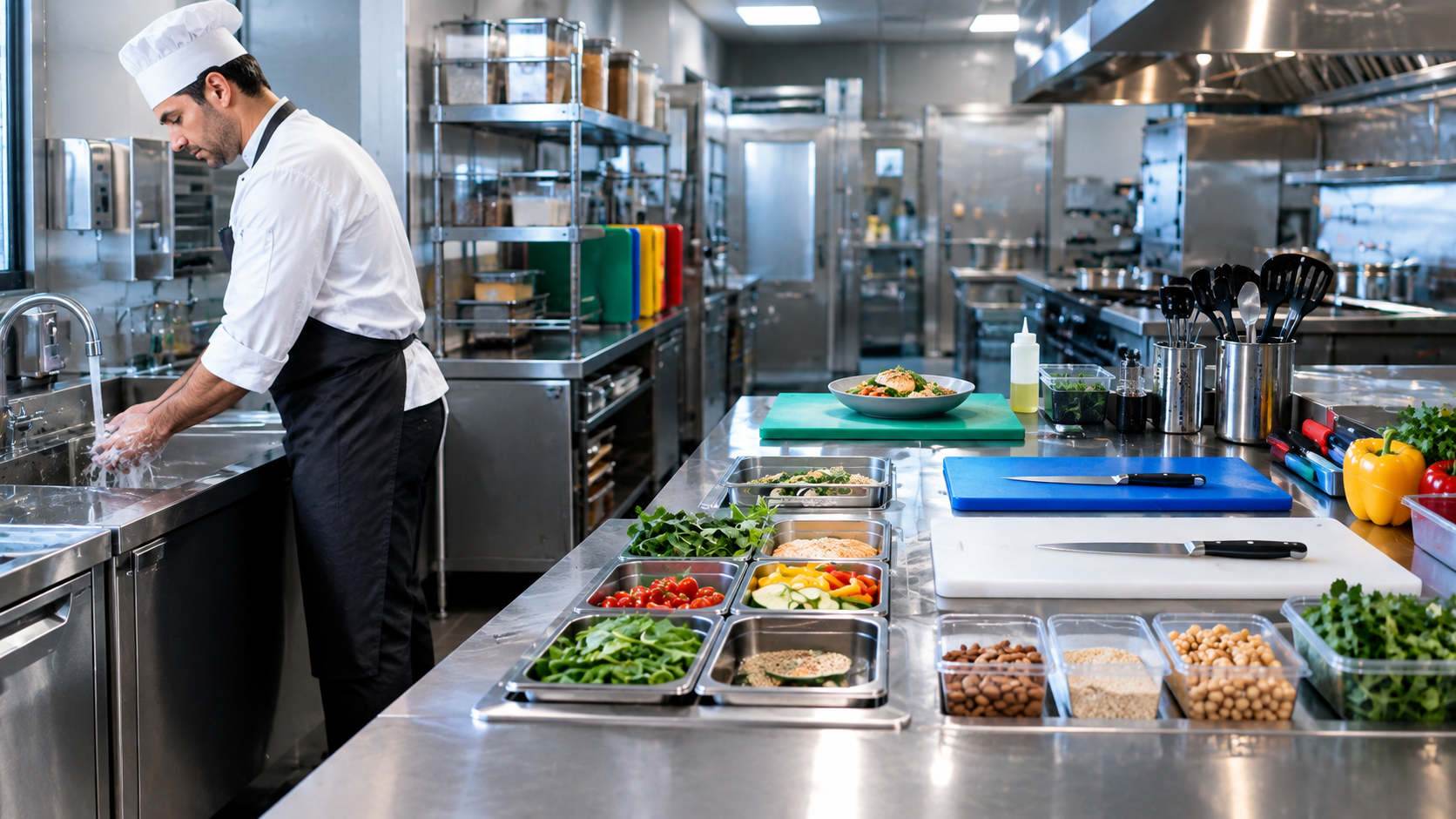
Use dedicated equipment where feasible and effective cleaning procedures where appropriate. Wash hands with soap and water; hand sanitizer does not remove food allergens reliably. Removing a visible topping after it has touched the meal does not undo the contact. Prepare a replacement using appropriate precautions. FARE: Avoiding Cross-Contact
For your next training exercise, walk through one order at the actual workstation. Ask employees to identify where utensils, ingredients, and finished dishes could come into contact. Practice helps reveal details that a classroom explanation may miss.
Make handoffs explicit
Decide how an allergy order will be identified at the service counter and who will deliver it. Include takeout packaging and last-minute additions in your procedure.
For example, your internal rule might require the person handing over the meal to match its order identifier with the allergy request before release. Test whether the same rule works during a busy shift, when several similar dishes are waiting together.
Digital menus can support this process if your system allows ingredient notes and allergy instructions. Before relying on those features, place a test order and check exactly what the kitchen receives. An instruction visible on the guest’s screen is useful only if it reaches the employee who needs it.
Prepare for an emergency before one happens
Staff should recognize possible allergic reactions, including hives, vomiting, swelling, wheezing, breathing difficulty, or collapse. FDA: Food Allergies
Suspected anaphylaxis requires immediate action. Epinephrine is the first-line treatment; use the person’s available prescribed device promptly according to its instructions and their emergency plan, and call emergency services. Antihistamines cannot replace epinephrine. Emergency evaluation is necessary even if symptoms improve. FARE: Anaphylaxis
Build staff training around clear roles: calling for help, giving the restaurant’s address, assisting the guest, and directing responders to the right location. Review the procedure with qualified trainers and account for local requirements.
Start with one dish and one shift
Choose a frequently ordered meal and trace an allergy request through your restaurant. Can the server locate the ingredient information? Can the cook explain the preparation precautions? Does the person delivering the meal know which order it belongs to?
Write down any unanswered questions and assign someone to resolve each one. Use what you learn to improve the next dish’s records and the next shift’s briefing. A food allergen procedure becomes useful when employees can put it into practice during real service.