
A banquet event order (BEO) is a single document that captures every detail of an event — the menu, timeline, room setup, staffing, AV, and billing — so the venue and the client are working from one shared plan. It is the operational backbone of catered events, and getting it right is the difference between a seamless evening and a scramble.
Whether you run a hotel, a catering company, or a full-service restaurant, the banquet event order is the tool that keeps your kitchen, floor staff, and client aligned. This guide covers what a BEO is, its eight essential elements, how to create one step by step, and a ready-to-use template and example.
What Is a Banquet Event Order (BEO)?
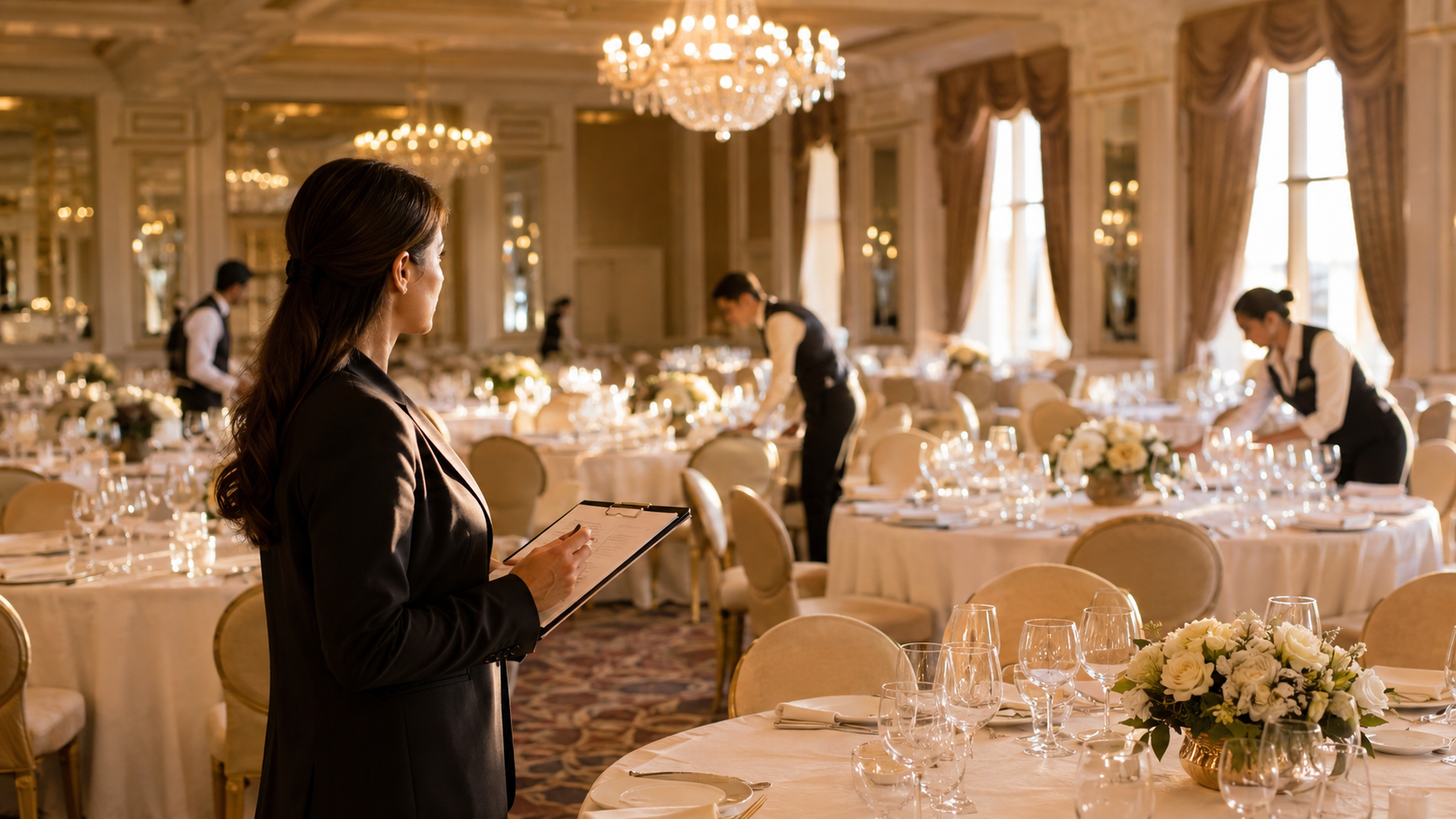
A banquet event order is a detailed, client-approved document that outlines all the requirements for an event in one place — from food and beverage to setup diagrams and final costs. Once signed by both the venue and the client, it becomes a legally binding agreement that governs how the event is executed.
If you are wondering what BEO stands for, it is simply Banquet Event Order. In hospitality, the BEO meaning is consistent across hotels, resorts, and catering services: it is the master reference sheet that turns a client’s vision into an actionable operations plan. Some venues also call it a function sheet or event order, but the purpose is identical.
The document is typically created by the event coordinator in collaboration with the client, then distributed to every department involved in delivery.
Why the Banquet Event Order Matters
The banquet event order matters because it eliminates guesswork. It gives the entire team one source of truth, protects both parties legally, and ensures the client’s expectations are delivered exactly as agreed.
A well-built BEO delivers three core benefits:
- Coordination. Kitchen, service, and setup teams all work from the same plan, reducing miscommunication.
- Accountability. Because it is signed, the BEO sets clear, agreed-upon expectations and prevents disputes.
- Efficiency. Repeat events can be duplicated and tweaked instead of built from scratch.
For high-volume venues, the BEO is also a record-keeping asset, a history of what worked, what was ordered, and what the event cost, all of which informs future packages and pricing.
The 8 Essential Elements of a Banquet Event Order
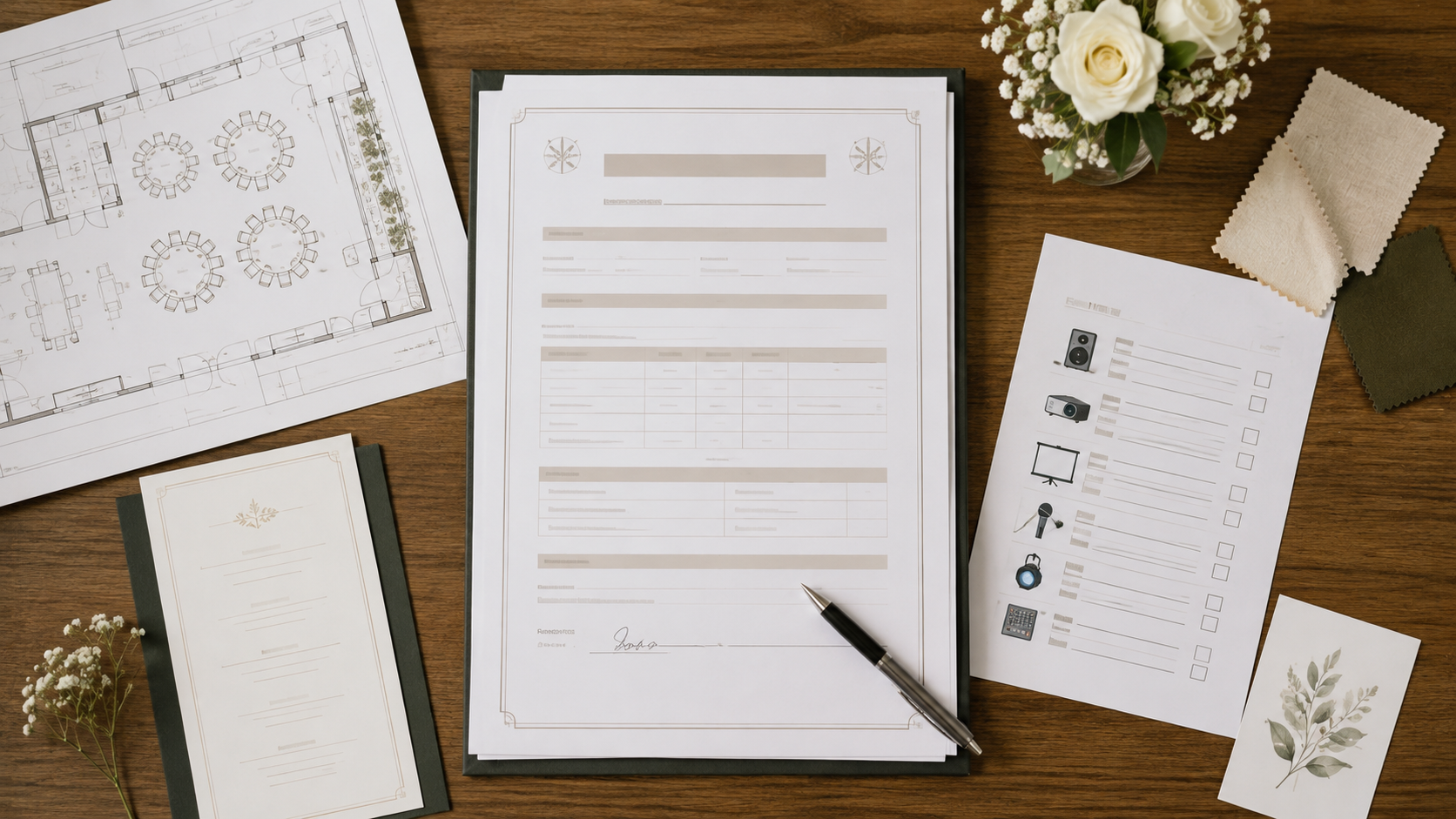
Every effective banquet event order includes eight core components. Together they form a complete, unambiguous picture of the event so nothing is left to interpretation.
- Event information. The foundation — event name, contact person, date, start and end times, event type, and room location.
- Schedule and timing. The minute-by-minute flow: venue access, guest arrival, ceremony or program, and meal service windows.
- Venue details. Expected and guaranteed guest counts, room setup, table type and layout, chair counts, and setup diagrams.
- Food and beverage. Appetizers, mains, desserts, children’s meals, beverage selections, and quantities per serving.
- Staffing and security. Number of servers, technicians, reception staff, security personnel, and parking arrangements (valet or self-park).
- Decorations. Theme, colors, statement pieces, and any client-supplied or venue-supplied décor.
- Audio-visual equipment. Microphones, sound systems, projectors, LED displays, and connectivity such as HDMI and Wi-Fi, with quantities specified.
- Billing and policies. A full cost breakdown for food, beverage, service, and rental fees, plus cancellation, payment, and outside-food or alcohol policies.
How to Create a Banquet Event Order (Step by Step)
To create a banquet event order, collect the event details, document every requirement, distribute updates to each team, then review and confirm with the client before the event. The process is straightforward when handled in four disciplined stages.
Step 1: Collect event information
Meet with the client to establish the essentials — guest count, event type, date, time, and any special requests. This conversation is the foundation of the entire BEO, so clarify anything ambiguous before moving on.
Step 2: Document every detail
Record each requirement carefully and double-check it against the client and relevant departments. Special requests around menu, venue, and setup must be captured precisely to avoid disappointment on the day.
Step 3: Distribute updates to every team
Whenever something changes — even slightly — circulate the updated BEO so everyone is working from the current version. Hold a pre-event briefing so each team member understands their role.
Step 4: Review and confirm
Verify all details with the client and venue manager a few days out. A final run-through catches errors and locks in expectations before service begins.
Banquet Event Order Template
A banquet event order template is a reusable, fill-in-the-blank version of the BEO that lets your team produce consistent, professional documents in minutes. Below is a simple structure you can adapt.
Section | What to include |
Event overview | Event name, client contact, date, times, event type, room |
Guest count | Expected count / guaranteed count |
Timeline | Access, arrival, program, meal service, close |
Room setup | Table style, layout diagram, chair count, staging |
Food & beverage | Course-by-course menu, quantities, dietary notes |
Staffing | Servers, bar staff, security, parking |
AV & décor | Equipment list, theme, colors, statement pieces |
Billing | Line-item costs, deposits, service fees, policies |
Signatures | Client signature, venue signature, date |
Keep a master template in a shared, centralized system so repeat clients can be handled by duplicating and editing an existing BEO rather than starting over.
Banquet Event Order Example
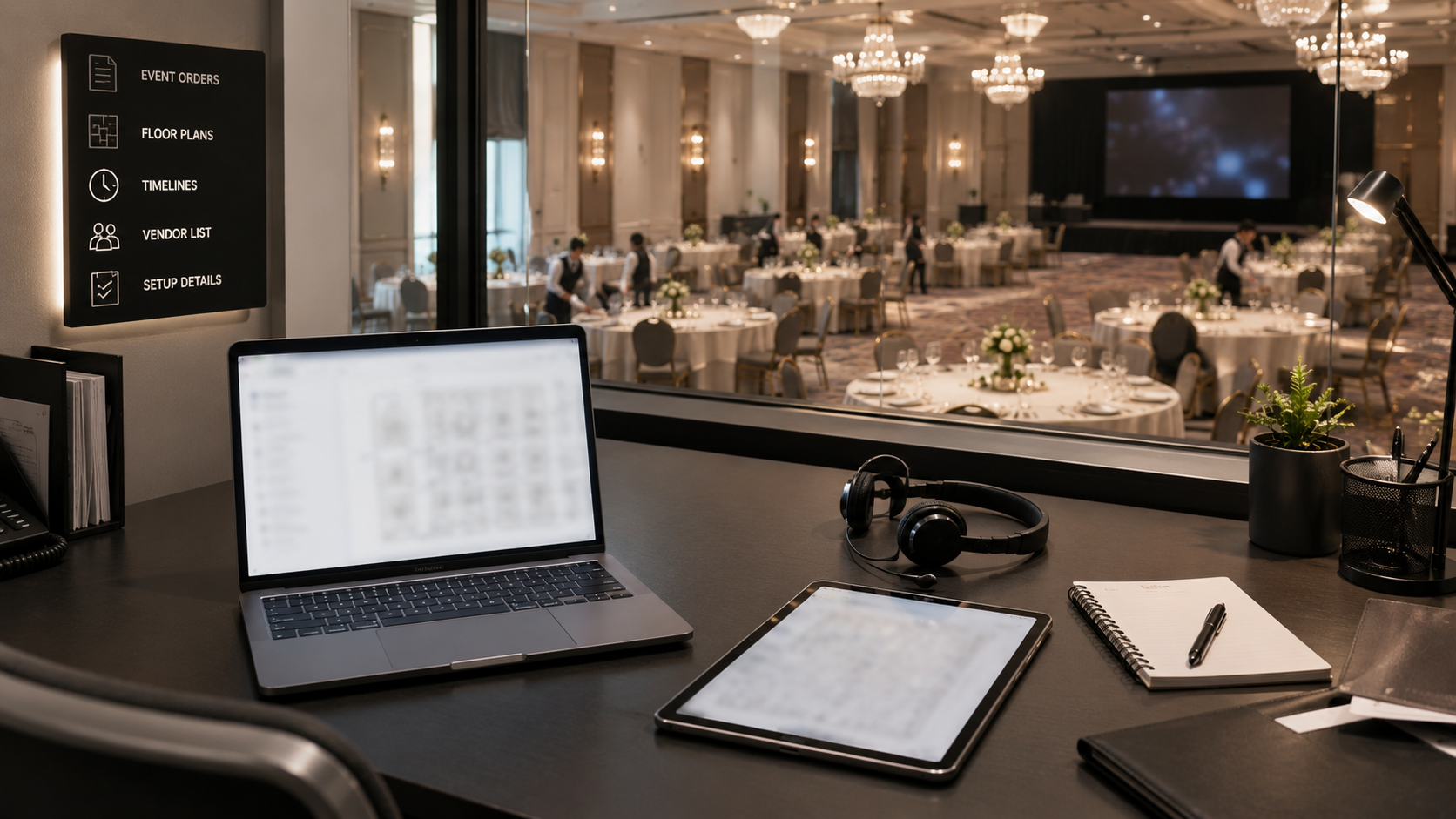
Here is a short banquet event order example to show the template in action:
Event: Anderson Wedding Reception Date/Time: October 12, 2026 · 6:00 PM – 11:00 PM Room: Grand Ballroom · Guaranteed count: 120 Setup: 12 round tables of 10, head table for 6, dance floor center Menu: Plated 3-course — burrata starter, choice of filet or salmon, chocolate torte Bar: Open bar, house wine + signature cocktail; last call 10:30 PM AV: 2 wireless mics, DJ power drop, uplighting in blush Billing: $148/guest · 22% service charge · 50% deposit on signing
A real BEO would expand each line with full quantities and setup notes, but the example illustrates how one page communicates an entire event.
Tips to Optimize Your BEO Process
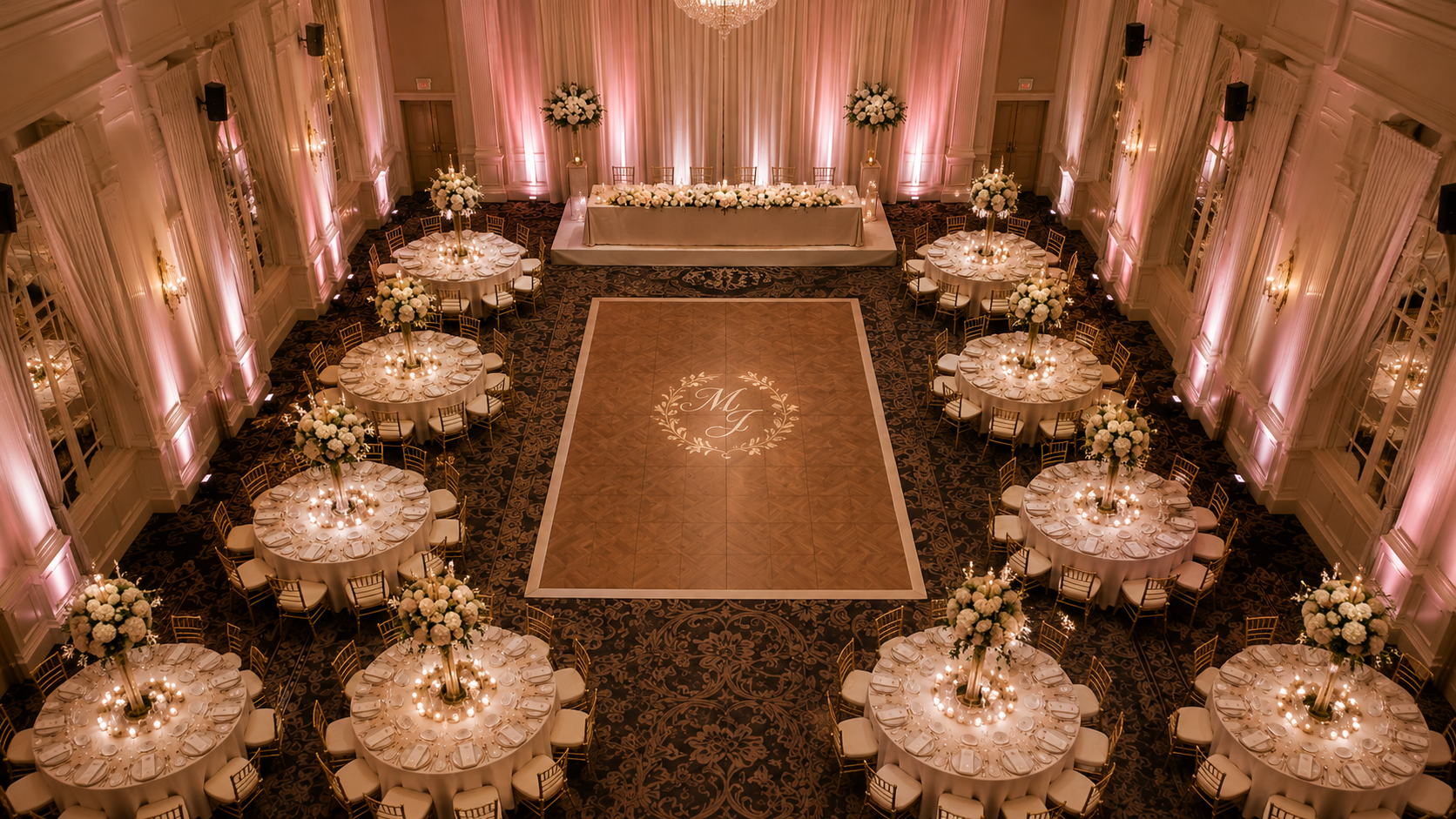
The fastest way to improve your banquet event order process is to standardize it with technology, checklists, and organized records. A few high-impact habits:
- Go digital. Use event-management software or a digital menu tool, so last-minute menu changes update instantly across teams.
- Use a checklist. Break BEO prep into ordered, actionable steps so nothing critical is missed.
- Keep records centralized. A searchable database of past events speeds up repeat bookings and informs pricing and menu decisions.
- Train your staff. New team members should learn to read a BEO correctly to prevent errors and unnecessary costs.