
What Does Bussing Tables Mean?
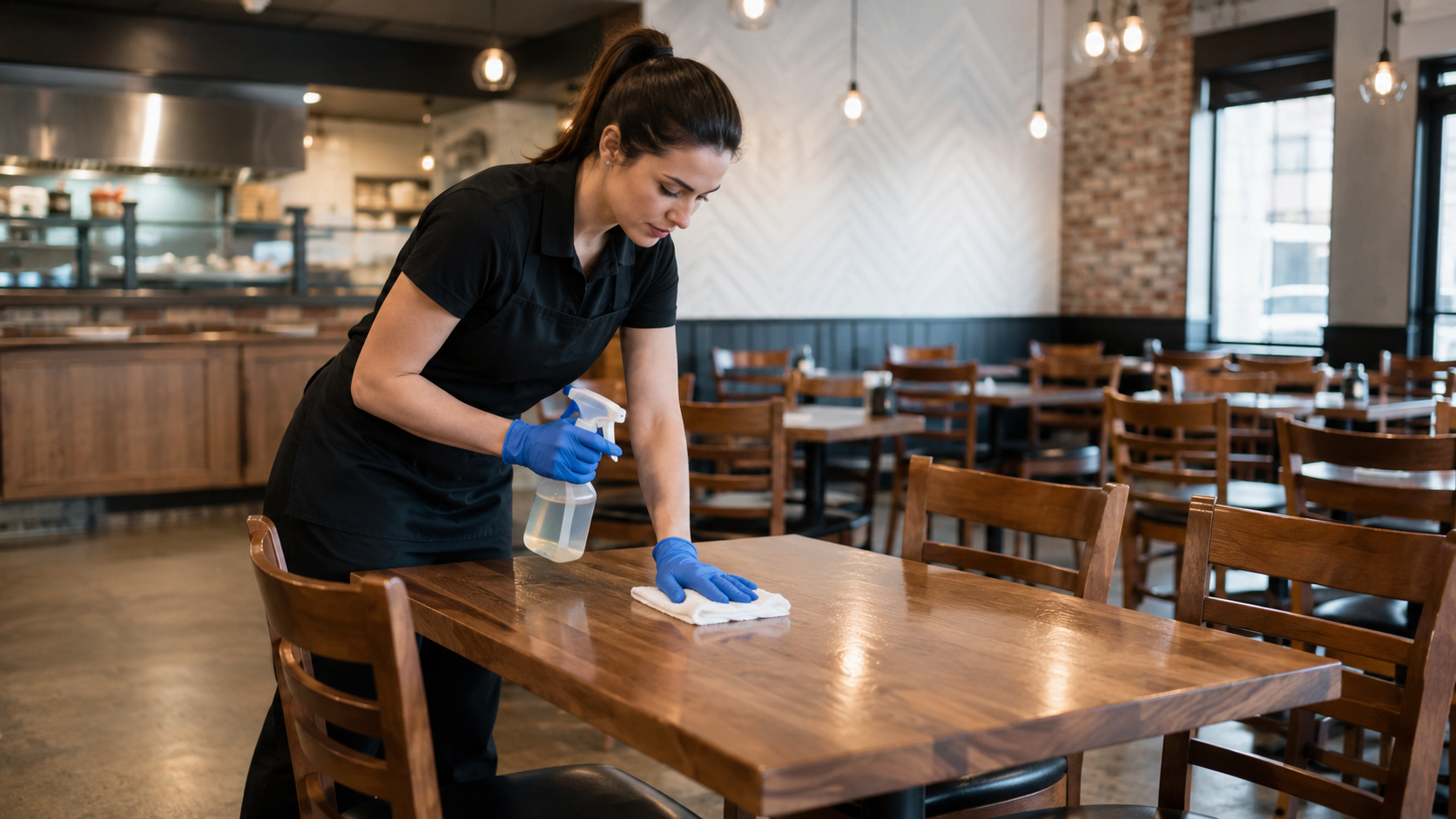
Bussing tables is the process of clearing used dishes, glassware, cutlery, napkins, and other items from a dining table during and after a meal. It also includes wiping the table, replacing required items, and preparing the space for the next guest.
The role is often performed by a busser, but servers, food runners, hosts, and managers may also help when the restaurant is busy.
Good table bussing keeps current guests comfortable and prepares tables quickly for new customers. It is part of the service flow, not simply a cleaning task.
Why Bussing Tables Matters
A clean table sends an immediate message about the quality of a restaurant. Guests are more likely to trust the food, service, and overall operation when the dining area looks organized.
Fast and careful bussing also improves table turnover. When finished tables remain cluttered, waiting guests cannot be seated. That creates longer queues and may reduce the number of customers served during peak hours.
It also provides clear operational benefits:
- Servers have more time to focus on orders and guest needs.
- Dining rooms appear cleaner and more professional.
- Used plates do not overcrowd the table.
- Risks from broken glass and spills are reduced.
- Hosts can seat guests more efficiently.
- Dishwashing teams receive items in a steady flow.
In short, good bussing tables procedures help the entire restaurant work better.
When Should a Table Be Bussed?
Timing is one of the most important parts of bussing tables. Removing items too slowly makes the table feel messy, while clearing too quickly can make guests feel rushed.
During the meal, empty plates should usually be removed when everyone has finished that course. If one person is still eating, clearing everyone else’s plates may create discomfort unless the guests request it.
Empty glasses, wrappers, used cutlery, and unnecessary dishes can be removed carefully throughout the meal. However, staff should avoid reaching across guests or interrupting conversations.
After the party leaves, the table should be cleared promptly. The goal is to reset it quickly without creating noise or appearing careless.
Trained employees learn to read signals such as plates being pushed aside or cutlery being placed together.
How to Bus a Table Correctly
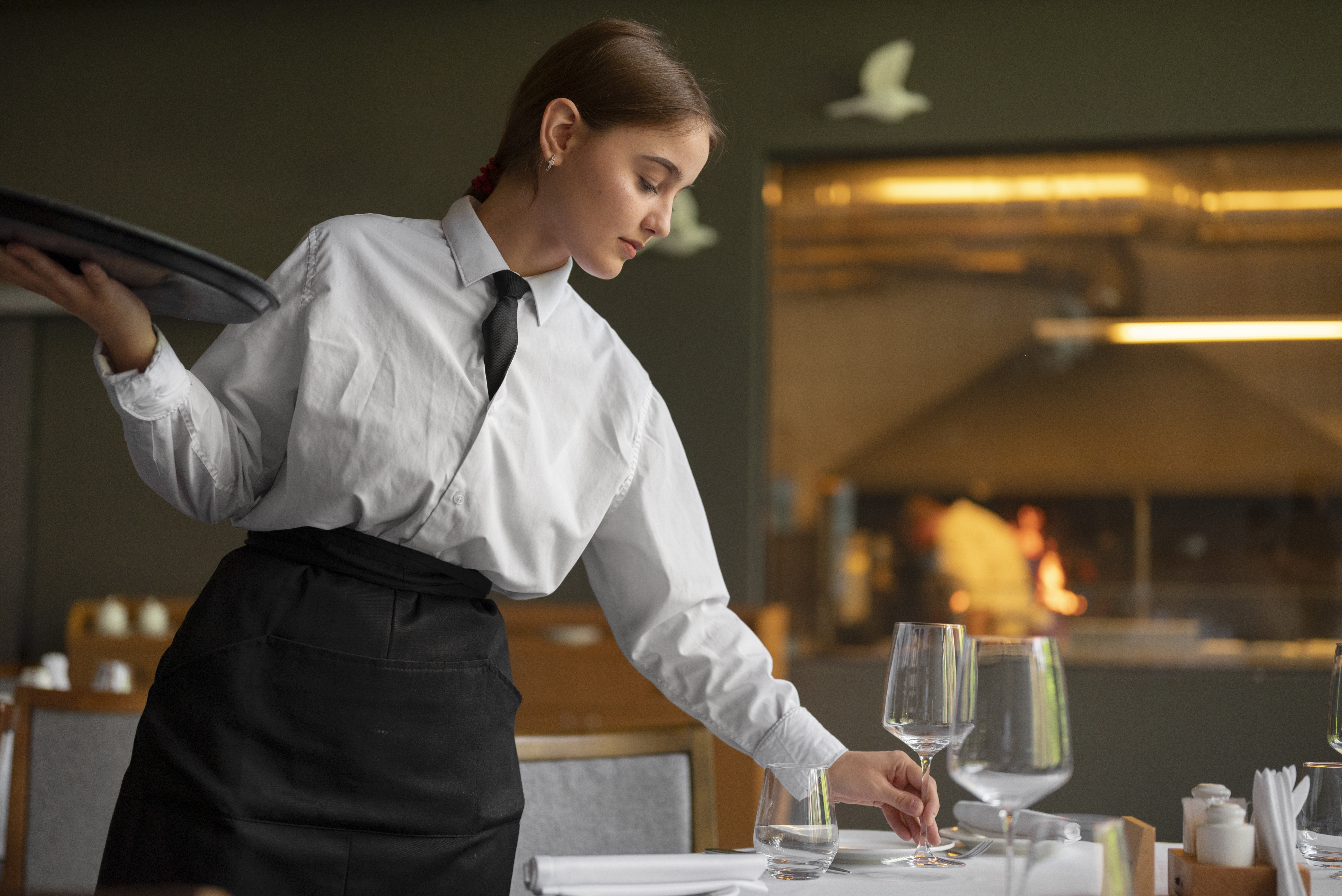
A consistent process helps staff work faster and reduces mistakes.
1. Observe Before Approaching
Look at the table before moving in. Check whether guests are still eating, whether glasses need refilling, and whether items can be removed without disruption.
Do not assume a plate is finished because little food remains. When unsure, ask politely:
“May I clear this for you?”
This simple question prevents misunderstandings and shows respect for the guest.
2. Clear From the Best Side
In many restaurants, plates are cleared from the guest’s right side whenever possible. Still, table layout and service style may require flexibility.
The key rule is to avoid reaching across a guest. Move carefully and keep dirty dishes away from clean food.
Staff should also remain aware of nearby guests, children, bags, chairs, and servers carrying hot plates.
3. Remove Items Quietly
Stacking dishes loudly can damage the dining atmosphere. Avoid scraping plates at the table, dropping cutlery into cups, or creating unnecessary noise.
Large stacks may also be unsafe. Carry only what can be handled comfortably. When bussing tables, speed matters, but control matters more.
A fast busser who regularly drops glasses or spills food creates more problems than they solve.
4. Separate Waste Properly
Food scraps, napkins, broken items, and reusable tableware should be separated according to restaurant procedures.
Sorting items reduces delays. Sharp objects and broken glass should never be mixed with general waste.
Restaurants may also have separate systems for recycling, food waste, disposable packaging, and reusable service items. Staff should understand these procedures before beginning a shift.
5. Clean and Sanitize the Area
Once all items are removed, wipe the table completely. Check the edges, corners, seats, and floor around the table.
Use the approved cleaning solution and follow the restaurant’s sanitation policy. Do not spray chemicals near guests or uncovered food.
The surface should be clean, dry, and crumb-free before the reset begins. A table that is still wet or sticky is not ready for the next party.
6. Reset the Table Consistently
Every table should match the restaurant’s standard. Replace menus, napkins, cutlery, glasses, condiments, or QR code displays as required.
Align the chairs and inspect the full area. A neat reset allows the host to seat the next party immediately.
Consistency is important because guests should receive the same first impression regardless of where they are seated.
Essential Skills for Bussing Tables
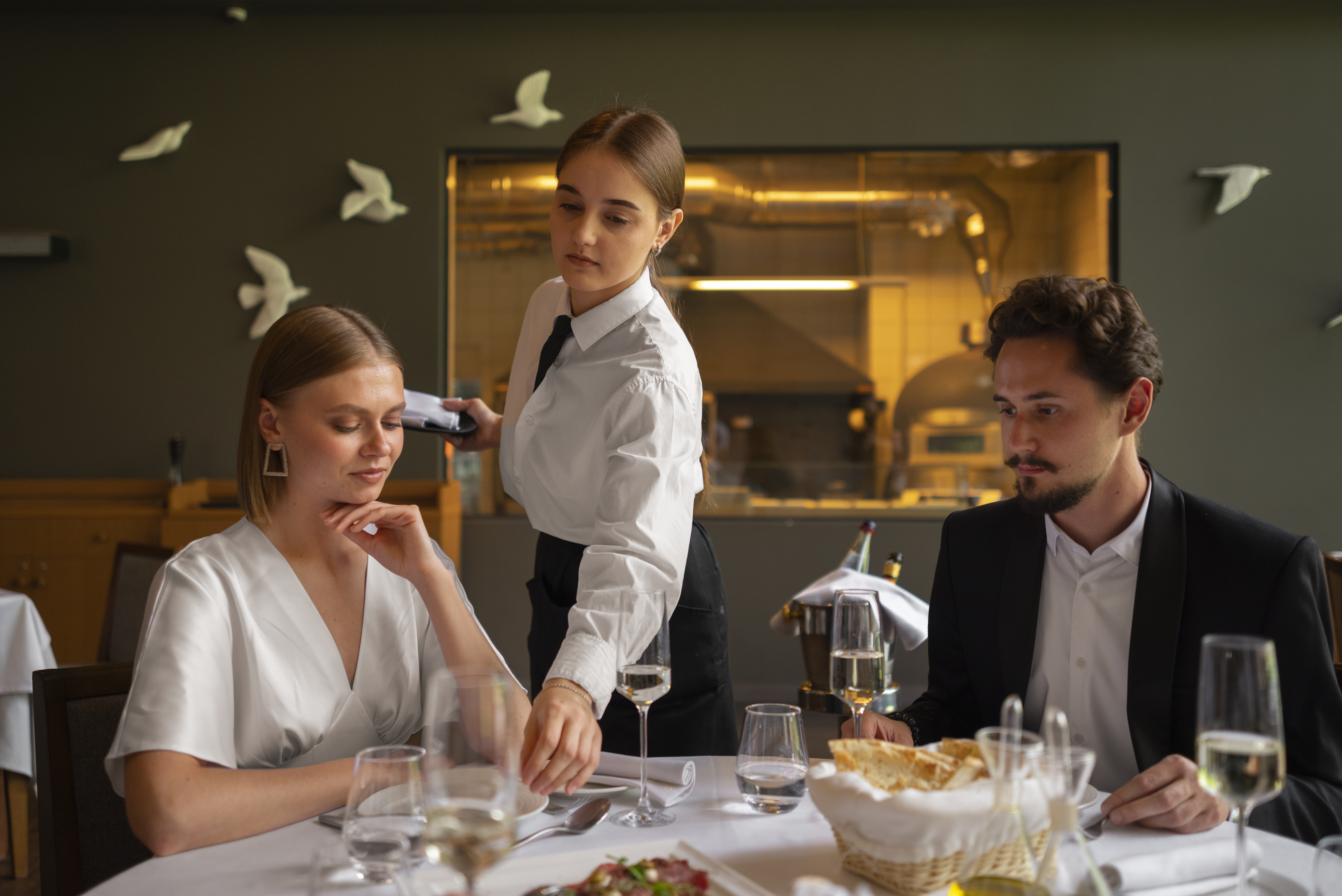
Effective bussing tables requires more than physical speed. The best bussers combine several service skills.
Awareness
A busser must monitor multiple tables discreetly, noticing empty plates, spills, low water glasses, and departing customers.
Good awareness allows staff to act before a server needs to ask for help. It also helps them decide which task should be completed first.
Communication
Bussers work closely with servers, hosts, food runners, bartenders, dishwashers, and managers. Clear communication prevents duplicate work and missed tasks.
A busser should always pass guest requests to the right person rather than assume someone else will handle them.
For example, when a guest requests another drink or reports an allergy concern, the busser should notify the server immediately.
Organization
Busy shifts can become chaotic. A good busser follows a logical route through the dining room and avoids unnecessary trips.
Taking dishes to the correct station and resetting tables in priority order saves time.
Supplies such as napkins, cutlery, cleaning cloths, and menus should also be stocked before service begins.
Professionalism
Guests notice posture, facial expressions, hygiene, and behavior. Bussers should remain calm, polite, and presentable even during peak service.
They should never complain, argue, or discuss internal problems within earshot of customers.
Professionalism also means respecting guests’ personal space and responding politely when someone asks for assistance.
Physical Safety
The job involves lifting and carrying breakable items. Staff should use trays correctly, avoid overloaded stacks, and report spills immediately.
Employees should also wear suitable footwear and use safe lifting techniques when handling heavy trays or bus tubs.
Common Bussing Mistakes to Avoid
Even experienced teams can develop poor habits.
Clearing Too Early
Removing plates while someone is still eating can make the guest feel pressured. Wait for a clear signal or ask for permission.
Guests should never feel that the restaurant is trying to rush them out.
Reaching Across Guests
This is disruptive and may cause spills. Approach from the clearest side and avoid placing arms near a guest’s face or food.
When access is difficult, politely ask the guest to pass the item rather than stretching across the table.
Overloading Trays
Carrying too many items increases the risk of broken dishes and injuries. More trips are better than one unsafe trip.
New employees should gradually learn their carrying limits instead of copying more experienced staff members.
Ignoring the Floor and Chairs
A table is not fully ready if crumbs remain on a seat or food is visible underneath. Check the entire area before reseating.
High chairs, booster seats, nearby walls, and window ledges may also require attention.
Mixing Clean and Dirty Items
Used dishes should never touch clean cutlery, glasses, menus, or napkins. Clear separation supports hygiene.
Dirty cloths should also be stored separately from fresh table-setting supplies.
Making Too Much Noise
Loud dish stacking, glass clinking, and rushed movements can disturb nearby tables. Efficient service should still feel controlled.
The best bussing tables practices are almost invisible to guests because they happen smoothly and quietly.
How Restaurants Can Improve Bussing Tables
Restaurants can improve performance by creating a simple, repeatable system.
Start with clear standards. Every employee should know when to clear, how to sanitize, what belongs in the setup, and how the finished table should look.
Use a table map or section system so responsibilities are easy to understand. During busy periods, prioritize tables that have just left, especially when customers are waiting.
Managers should include bussing tables in practical training. Demonstrations are often more effective than written instructions alone. New staff can practice carrying trays, clearing without reaching, sorting dishes, and completing a proper reset.
Cross-training is also useful. Servers should be willing to clear plates, while bussers should understand basic guest service. A team-based approach prevents tasks from being ignored because they fall outside one person’s job title.
Restaurants can track reset times during peak service to find bottlenecks. Slow resets may result from missing supplies, poor station design, or unclear communication.
Management should use this information to improve the workflow rather than pressure employees to move unsafely.
Bussing Tables and Guest Experience
Guests may not always notice excellent bussing tables, but they quickly notice when it is done poorly. A skilled busser works in the background. Empty dishes disappear at the right time, spills are handled quickly, and the reset feels smooth.
This creates a cleaner dining experience and gives servers more time for recommendations and hospitality. The best results come from balance. Staff should be attentive without hovering, fast without rushing, and efficient without becoming noisy. When bussers, servers, hosts, and kitchen staff work together, guests experience better service from the moment they sit down until they leave.
Final Thoughts
Bussing tables is a core part of restaurant service. It influences cleanliness, speed, safety, table turnover, and guest satisfaction.
A strong process includes careful observation, polite communication, safe clearing, proper sanitation, and a consistent table reset. When these steps are supported by training and teamwork, the dining room operates more smoothly.
Restaurants that treat bussing tables as an important service function, not just a cleanup duty, are better prepared to handle busy periods, serve more guests, and maintain a professional atmosphere.