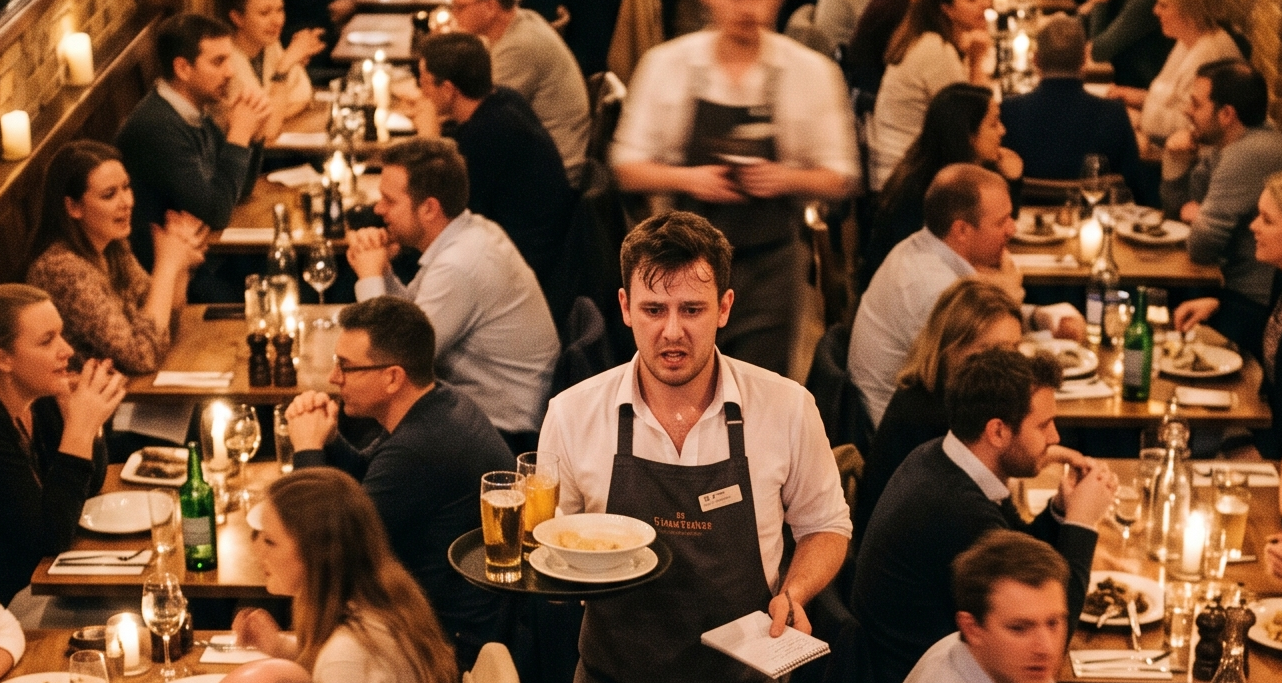
It is 7:30 on a Friday evening. Every table is taken, four parties are waiting at the door, and two of your servers are already juggling more than they can handle. The kitchen is moving. Guests are not. And somewhere in the middle of that chaos, revenue is quietly walking out the door.
This is not a staffing problem. It is a queue management problem, and it is one of the most underestimated challenges in the hospitality industry today.
Restaurant queue management is the process of organising how guests wait, how tables are assigned, how requests are handled, and how service flows from the moment a customer arrives to the moment they leave. Get it right and you serve more guests, stress your team less, and earn more per shift. Get it wrong and you lose covers, tips, and repeat customers, even on a packed night.
In this guide, we break down what smart queue management actually looks like in practice, why it matters more than ever in 2026, and how restaurants are solving it without expensive new systems or extra hires.
The Biggest Queue Management Mistakes Restaurants Make
Most queue problems in restaurants are invisible until they compound. Here are the most common ones — and what they actually cost.
1. No real-time visibility on table status
When a manager has to walk the floor to know which tables are free, which need clearing, and which guests have been waiting the longest, you have already lost 3–5 minutes. Multiply that across a full service and it adds up fast.
2. Guests waiting without any contact
Guests who feel ignored leave — or at minimum, they leave unhappy reviews. The moment a seated guest cannot get a waiter’s attention, their satisfaction drops sharply, regardless of how good the food was.
3. Staff without zone clarity
When calls for service go to the whole team instead of the right person, you get two servers rushing to one table and zero servers at another. Uncoordinated service is one of the biggest hidden drains on guest experience and staff morale.
4. Manual handoffs between front-of-house and kitchen
Verbal or paper-based communication between floor and kitchen creates gaps. Orders get misplaced, timing goes wrong, and guests wait longer than they should. In a busy service, these small gaps accumulate into serious delays.
5. No data to improve with
If you do not track response times, peak periods, and service flow, you are managing blind. The same problems repeat themselves shift after shift because there is no visibility into when and where the bottlenecks actually happen.
What Effective Queue Management Looks Like in Practice
Smart restaurant queue management is not about adding complexity — it is about removing friction. The best systems do less work noisily and more work invisibly, letting your team focus on the guest rather than the process.
- Guests can signal their needs instantly — no waving, no eye contact required, no ignored tables.
- Servers receive calls only from their assigned zones, so the right person always responds to the right table.
- Managers can see live table status across the whole floor in real time, without having to physically walk through the restaurant.
- Tables are cleared and reset faster because staff know exactly when service is complete and where attention is needed next.
- Data is collected passively — call volume, response times, peak hours — so that each shift informs the next one.
When all of these elements work together, the result is a noticeably smoother service. Guests feel attended to. Staff feel less stretched. And the restaurant turns more covers in the same amount of time — without adding headcount.
How Technology is Changing the Queue
For years, restaurant queue management meant clipboard waitlists, pagers, and a host calling names across a crowded entrance. The tools were clunky, expensive, and required significant staff training. Most small and mid-size operators simply made do without them.
That has changed. QR-based systems now allow restaurants to manage tables, route service calls, and monitor floor activity from a single phone or tablet — no additional hardware, no lengthy setup, no training marathon.
The shift is significant for one simple reason: the cost barrier is gone. A €99/year tool that reduces table idle time by 10 minutes per night across 200 nights of service pays for itself many times over. For a restaurant operating at the margins, most are, that is a meaningful financial difference.
The best digital queue management solutions for restaurants in 2026 share a few characteristics: they work from the guest’s own device (no app download required), they route service to the right staff automatically, and they give owners real-time data on how their floor is performing.
Key Features to Look for in a Queue Management System
- Live table status dashboard— know at a glance which tables need service, which are waiting to pay, and which are ready to turn over.
- Area-based staff routing— assign waiters to zones so notifications go to the correct person, not the whole team.
- Guest-facing call button— guests signal from their own phone via QR code. No app. No friction. Immediate.
- Order timer visibility— guests can see how long their order has been in, which reduces unnecessary interruptions and impatience.
- Service statistics— track response times, peak hours, and call volume so you can make data-backed decisions about staffing and layout.
- Waiter call cooldown— prevent duplicate requests from the same table, reducing noise and keeping the system clean.
These features do not require a POS system, a new app for guests, or a dedicated operations manager. They are designed to work in a real restaurant environment — fast, intuitive, and useful from day one.
Ready to Stop Losing Revenue to Slow Service?
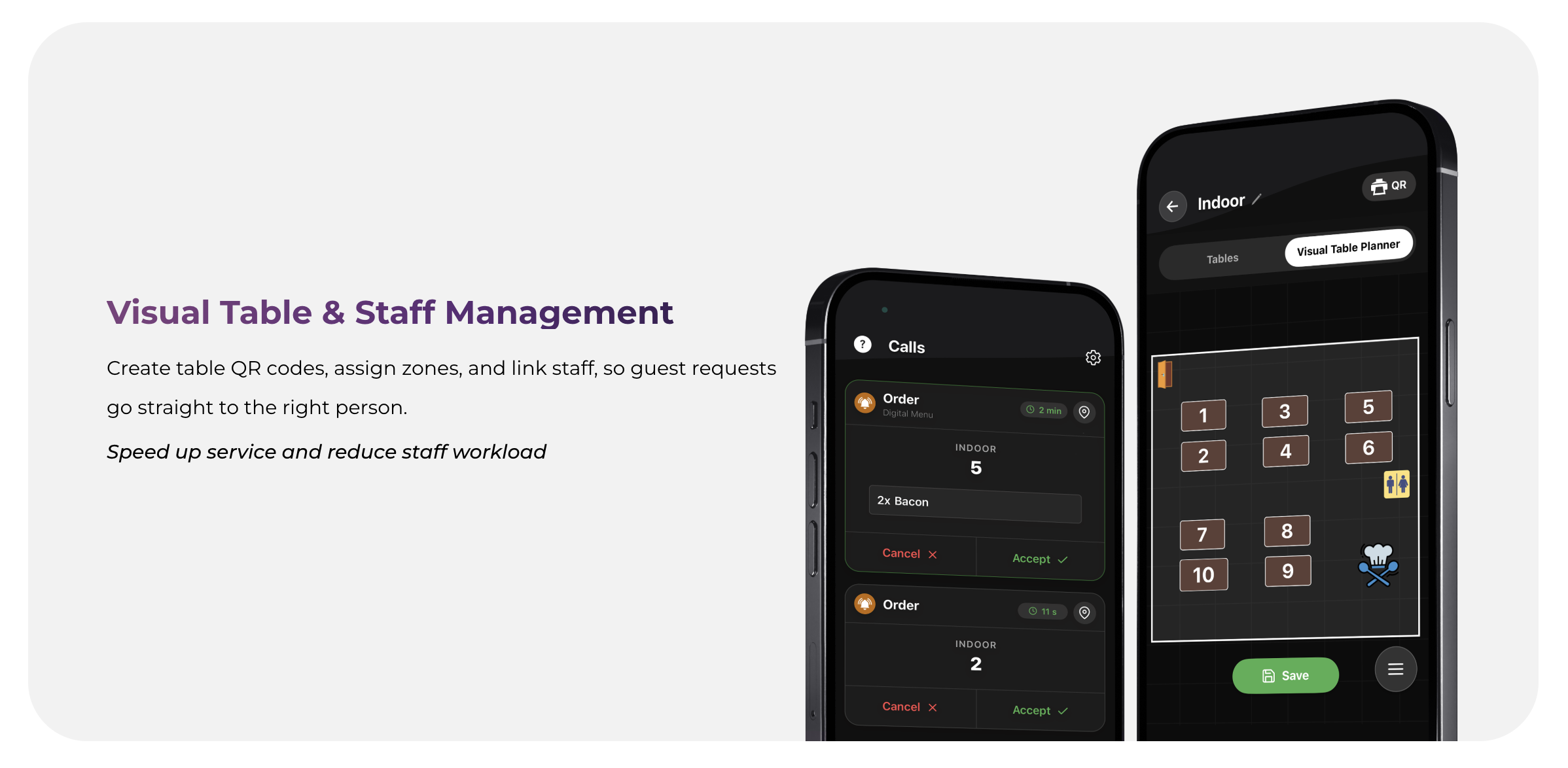
If your restaurant is already busy most nights, the problem is rarely demand, it is execution. Call The Service gives you live table management, zone-based staff routing, and real-time service statistics, all through a simple QR code. No new hardware, no app download for guests, and setup takes minutes. The free plan is available with no credit card required. Start today and explore a live demo to see exactly how it works in a real restaurant environment.